Some buildings settle into one job and keep it for life. The American Building was not one of those buildings. Over roughly seven decades on South Orange Avenue, it sold Dodges, parked cars, housed insurance men, changed its name twice, and then slipped out of downtown Orlando so quietly that most people working nearby today have never heard of it.
Honestly, that's a crime, because few addresses in the city ever packed this much plot into one block.
Quick public service announcement for longtime locals: this is not the round, space-age savings-and-loan that once stood at 455 South Orange Avenue. That was the American Federal Building, which opened in 1963 and came down in 2015. Different building, different decade, same uncanny ability to start an argument at trivia night.
Table of Contents
Act One: A Lawyer, a Doctor, and a Tea Room
The block bounded by South Orange Avenue, Church Street, Magnolia Avenue, and Jackson Street didn't begin life as a business district. It began with a front porch. The earliest name tied to the property is Orville L. Rogers, a Virginia-born lawyer who landed in Orlando in 1878, back when the town had more cattle and citrus than anything resembling a skyline.
In 1894, physician Dr. King Wylly made the site his home. His house had staying power, and by 1920 it had picked up a delightful side hustle as the Polly Anna Tea Room. Picture finger sandwiches where office towers would someday rise. All over downtown, family homes were trading bedrooms for storefronts, cafés, and offices as the commercial core crept outward.
Then 1923 arrived and the plot thickened. Mrs. R. W. Rowland bought the property and, instead of flattening the old house, had it hauled over to McKee Avenue. Moving entire houses was a pretty normal move during Orlando's boom years, when downtown land had simply become too valuable for a single-family home. Hotels, banks, theaters, and car dealers were all elbowing for space.
Act Two: Six Stories of Horsepower
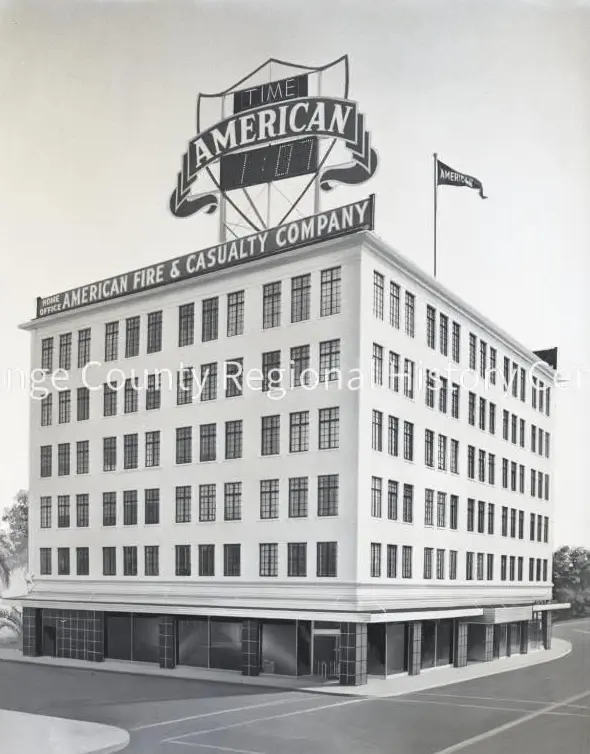
What went up next was big, bold, and very much about cars. Between 1923 and 1924, the L. C. Townsend Company built a six-story automobile facility for the I. W. Phillips Dodge Agency. Shoppers kicked tires on the lower level, while the floors above handled parking and storage.
Let that sink in for a second. Orlando in the early 1920s was still a modest Southern town, and somebody looked at it and decided it needed a six-story home for automobiles. Bold bet? Absolutely. Wrong bet? Not even a little. Orange Avenue was turning into the city's main commercial spine, and the car was busy rewriting how locals shopped, worked, and got around.
The Phillips name carried real weight in town. Miller O. Phillips was a well-known Dodge distributor, and a separate Lake Cherokee historical trail points to his 1923 Orlando residence. In July 1926, the Miller O. Phillips Company packed up for a new spot on North Orange Avenue. The downtown building didn't stay lonely for long. Orlando Motors, Inc., an Oldsmobile distributor, rolled right in.
The Secret Was in the Concrete
Here's a fun fact to pull out at your next downtown happy hour. The future American Building was the first structure in the Orlando area to use concrete beams poured in place, a distinction noted on the Downtown Orlando Historical Trail.
Cast-in-place construction means crews formed and poured the beams right on site rather than trucking in prefabricated pieces. For a building expected to hold rows of heavy vehicles upstairs, that strength mattered. Desks and filing cabinets are one thing. A whole floor of Dodges is a very different kind of weight.
On a block otherwise filled with storefronts, small hotels, and local shops, here was a six-story frame tough enough to carry cars toward the sky. Long before it wore its famous name, the American Building was already ahead of its neighbors where it counted most: in the bones.
The mystery? Nobody seems to have written down who designed it. No architect's name survives in the accessible sources, and no one ever pinned a formal style on it. In a city that later fell head over heels for flashy facades, there's something charming about a building remembered mostly for what held it up.
How the Exchange Building Became the American Building
Once the car dealers moved on, the old garage got a career change. In the late 1920s it was converted to offices and rebranded as the Exchange Building. International Life Insurance Company moved in during 1928, and the address swapped horsepower for paperwork.
Then came the tenant that would outlast all the others. American Fire & Casualty Company, which UCF's RICHES archive describes as an Ohio-based firm, settled into the top two floors and stayed about 18 years. A 1946 federal listing placed the company on the sixth floor of the Exchange Building, right as things were about to get interesting.
That same year, American Fire & Casualty made its big move. For $250,000, the company traded its lease for the deed, and the Exchange Building got a new name to match: the American Building. Talk about a promotion. A tenant's mailing address had become a corporate calling card.
At street level, the change was easy to feel. Before 1946, the place was one office address among many. Afterward, anyone heading downtown to see an agent, pay a premium, or meet a client was walking into the American Building, a name that made it crystal clear who ran the show upstairs.
The timing was spot on. Postwar Orlando was growing into a regional business center, and insurance was a big piece of that story. Owning a six-story tower on South Orange Avenue was the 1940s equivalent of a really good billboard.
Life on a Very Busy Block
The new name stuck like glue. American Savings & Loan Association moved into the American Building in 1952, and in 1960, Orange County commission minutes were still listing American Fire & Casualty at the "American Building, Orlando, Florida." Around the same time, the state snapped the area from above, and that aerial image is cataloged under the insurance company's name.
The neighbors were half the fun. The block was dense and buzzing, packed with small hotels, restaurants, barbers, jewelers, food merchants, tire shops, and cab companies. A UCF archival photo from roughly 1941 to 1946 catches City Cab, Kelly's Tires, and the insurance company sharing the same stretch of South Orange Avenue. That scrappy little cab outfit later grew into Mears Transportation, a name just about every Central Floridian knows.
Back then, Magnolia Avenue went by South Main Street, and the block was old downtown at its most walkable: storefronts shoulder to shoulder, services on every corner, and the kind of fine-grained street life where you could get a haircut, fix a flat, and grab lunch without ever moving your car.
The Slow Fade (and a Mystery)
After the war, downtown's taste in buildings changed. Developers started buying up entire blocks for big office projects, plazas, and towers. UCF's Downtown Orlando Information Center Collection documents how the old block gave way to Barnett Plaza and the CNA Tower.
Exactly when that happened is where the record gets a little messy. One part of the collection says the old buildings came down in the early 1960s, then says the replacements arrived "in 1952." Another item dates Barnett Plaza and the CNA Tower to 1962. The 1962 date lines up with the early-1960s description, so it's the more believable reading.
Now for the plot twist. The historical trail says the American Building itself sat vacant for years and wasn't demolished until the 1990s. So either it held down a corner of the block that survived the first round of redevelopment, or the archives mashed separate demolitions into one tidy summary. Without parcel maps and demolition permits, nobody can say for certain.
If the trail's dating holds up, the American Building outlasted the Depression, World War II, and the first wave of towers rising around it, only to finish its run as an empty shell. That's a surprisingly quiet exit for a building that reinvented itself so many times.
So What's There Now?
The broader site later became tied to the CNA Tower and Barnett Plaza, then the BB&T building and a downtown information center. One retro look at South Orange Avenue notes that the American Fire & Casualty building and the neighboring Downtowner are both long gone, with the Grand Bohemian Hotel now holding the corner seen in the old photos.
It's tempting to point at one shiny tower and announce, "That's the spot." The honest answer is that the American Building's block was absorbed piece by piece into successive projects. Nailing down its exact footprint will take a bit more detective work.
Why Orlando Should Remember It
Few downtown buildings have a résumé this stacked. Check out the career highlights of the American Building:
- Homesite for an early Orlando lawyer and, later, a physician
- A tea room in a converted house
- A six-story Dodge agency and garage built during the 1920s boom
- The first local building with poured-in-place concrete beams
- The Exchange Building, home to insurance firms and professional offices
- A postwar corporate headquarters for American Fire & Casualty
- A vacant shell, then a demolition site in the 1990s
Line those up and you get a pretty great outline of how Orlando grew from a small town into a car-loving regional business hub. The American Building was never the tallest or prettiest kid on the block, but it may have been one of the most honest mirrors of the city around it.
The Pages History Left Blank
For all the paper trail the American Building left behind, a few details never made it into the accessible record. The architect's name is still a blank, and nobody has pinned down exactly which year in the 1990s the wrecking crews finally showed up. It's also unclear how neatly its footprint lines up with what stands on the block today, or whether the switch from garage to offices changed its outside look along the way.
Those answers most likely sit in the archives: Sanborn fire-insurance maps from 1924 onward, Orlando building permits, Polk city directories, Orange County deed records, and old demolition permits. The Orange County Regional History Center's architectural and real-estate collections are another place where the rest of this story may be hiding.
Downtown Orlando has a notoriously short memory. The American Building, with all those lives packed into six stories, deserves a much longer one.
🔥 Love Orlando history like this? Well, there's plenty more where this came from, right here.
Sources:
https://en.wikipedia.org/wiki/American_Federal_Building http://www.geocities.ws/krdvry/hikeplans/orlando_l_cherokee/planorlcher.html http://www.geocities.ws/krdvry/hikeplans/downtown_orlando/plandowntownorlando.html https://richesmi.cah.ucf.edu/omeka/items/show/4578 https://tile.loc.gov/storage-services/service/ll/cfr/cf/r1/94/70/02/-T/13/CI/IP/20/0/cfr1947002-T13CIIP200/cfr1947002-T13CIIP200.pdf https://www.occompt.com/DocumentCenter/View/38622/06-20-1960-Minutes https://www.floridamemory.com/items/show/339459 https://richesmi.cah.ucf.edu/omeka/exhibits/show/transformedblock/item/4622 https://richesmi.cah.ucf.edu/omeka/collections/show/126 https://orlandoretro.com/2013/05/19/the-round-building-orange-ave-and-south-st/