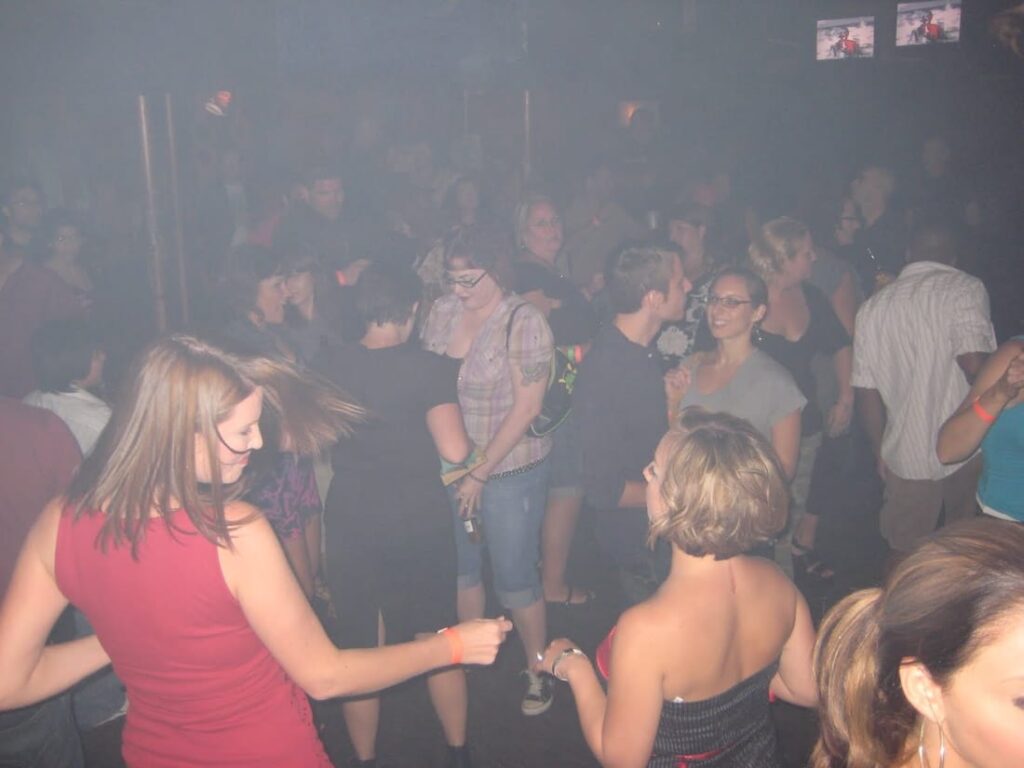
For most of the 2000s, if you were in downtown Orlando on a Saturday and you heard something thumping, odds are it was coming out of Tabu Nightclub. From 2001 until the lights went out in late 2010, the club ran the floor at 46 North Orange Avenue with hip-hop weekends, house-music Sundays, and Saturday-night crowds packed so tight that, as one regular put it, you could barely move.
Tabu Nightclub lived inside a century-old theater, had a Backstreet Boy on its design team, and was run by one of the most politically wired attorneys in the city. It outlasted three earlier clubs in the same room, then passed the keys to the venue still standing there today.
Here's how that whole run actually went down.
Table of Contents
Before Tabu Nightclub: 46 N. Orange Has a Long Memory
You cannot talk about Tabu without first talking about the building it haunted. The Beacham Theatre went up in 1921, built by former Orlando mayor Braxton Beacham Sr. on land that had previously held, of all things, the Orange County jail. From there the place cycled through identities the way Orlando cycles through tourists: vaudeville stage, silent film house, first-run cinema, concert hall, and, by the late 1980s, a bona-fide nightclub.
By the time Tabu Nightclub moved in, the room had already lived more lives than most downtown real estate sees in a century, and every one of those previous tenants left a fingerprint.
The loudest of those fingerprints belonged to Aahz, the after-hours den that put Orlando on the world electronic-dance map and inspired Rolling Stone to dub the city "the Seattle of electronica." When Aahz wrapped in 1994, attorney Mark NeJame, who had been holding the Beacham lease since 1992, took two more swings at the same room.
First came Dekko's (1992–1994), a big, mainstream dance club, and then Zuma Beach Club (1994–2000), which Rolling Stone cheerfully described as a "cheesy dive," and which, at one point, hosted an actual Extreme Championship Wrestling match. Orlando in the 1990s was a strange and wonderful place.
Zuma shut its doors in late 2000. The auditorium got another renovation. And in 2001, the lights came back up under a brand-new name: Tabu.
2001: A Backstreet Boy, a Boy-Band Town, and a New Club
Tabu arrived with a piece of pop-culture trivia so Orlando it could not possibly be fake. Howie Dorough of the Backstreet Boys, who, as a kid, had played a Munchkin in a Beacham-stage production of The Wizard of Oz, came back to the same building decades later and signed on as a design and talent-acquisition adviser for the new club. From Emerald City to VIP room, same address. In a city still surfing the last wave of late-'90s boy-band mania, that alone was enough to guarantee Tabu would open loud.
The plan, at first, was upscale. After Zuma Beach's glorious, sand-in-your-shoes mess, the new operators wanted something that felt grown-up: bottle-service energy, dressier weekends, a step or three up the downtown food chain. That identity would drift almost immediately, but the opening-night pitch was clean: Tabu was supposed to be the nicest room on Orange Avenue.
Who Actually Owned Tabu Nightclub
The partnership behind Tabu was small, tight, and unreasonably well-connected. At the center was Mark NeJame, the Orlando defense attorney who had been running the Beacham auditorium as a nightclub since the early 1990s, alongside Joseph SanFelippo and George Maltezos.
NeJame was never just a bar owner. He was a fixture in city politics: he helped revive Light Up Orlando, pushed for later drinking hours across downtown, and in 2003 the Orlando Sentinel named him one of four "power brokers" essentially calling the shots for the entire downtown bar scene. If you were cutting the ribbon on a club in Orlando in the 2000s, Mark NeJame was probably already inside.
Plaintiffs' attorney John Morgan, yes, that For the People John Morgan, also materialized somewhere in the Tabu Nightclub ownership picture. By 2009, observers were listing him as an owner, with the club leaning hard into hip-hop on most nights. Stack it up: one defense attorney, one of the most famous plaintiffs' attorneys in Florida, plus two career bar operators. The place had the kind of belt-and-suspenders legal firepower most Orange Avenue venues could only dream about.
The Sound: DJs, Nights, and a Packed Floor
That upscale vibe? It did not last. By the mid-to-late 2000s, Tabu had given up pretending and leaned all the way into what the crowd actually wanted: hip-hop and Top 40, loud, with a heavy pull from the 102 Jamz radio audience. Saturdays belonged to resident DJ Richie Rich, who could pack the floor into a single warm-bodied mass until the house lights politely suggested people head home.
A 2009 club blogger called Tabu "likely the most famous of Orlando clubs," noting that street promoters on Orange Avenue were constantly pressing free-entry cards into the hands of anyone who looked like a tourist.
The weekly rotation was half the charm. Friday and Saturday were the hip-hop and Top 40 flagships. Sunday belonged to "Service Industry Night," a house-music session built for bartenders, servers, and club staff who had finally clocked out and wanted something that did not sound like the radio. Latin nights and themed promotions filled in the rest of the week, and Tabu handed out enough comp cards that nobody with a pulse and a driver's license was paying cover on a slow Tuesday.
If you played the week at Tabu Nightclub in reverse, which, let's be honest, is how most regulars remember it, you opened on Saturday's wall-to-wall mayhem, Richie Rich running the room until closing. Friday hit nearly the same note, the hip-hop and Top 40 crowd spilling off the floor and out onto the Orange Avenue sidewalk. Sunday turned the dial way down with house music and a service-industry crowd that made the place feel like a completely different club for twelve hours.
Then Monday through Thursday, the room rotated through Latin nights, private bookings, and whatever promo the week called for. Tabu wasn't one club. It was three, stacked on top of each other in the same room.
That variety is a big part of why Tabu Nightclub beat the dozen-odd venues chasing the same customers. It sat inside a large historic auditorium, so it could swallow a capacity Saturday without choking at the door. It had real traction with the 102 Jamz audience. Its residents stuck around long enough to build their own followings. And in an industry where most clubs last as long as a gym membership, that kind of consistency was itself the edge.
People knew what Tabu would sound like on any given night, and for most of the 2000s, they were right.
Downtown Orlando in the 2000s: A Crowded Block
Tabu was not operating in some sleepy corner of the city. Orange Avenue in the 2000s was one of the most competitive nightlife corridors in Florida. A few blocks could get you to Bliss Ultra Lounge for house, Independent Bar for '80s new wave and alt-rock, plus a rotating cast of lounges, sports bars, and Latin clubs all elbowing for the same weekend wallets. For hip-hop and Top 40 fans, though, the decision was easy: Tabu was the answer. Size, DJs, and location made it the anchor of the block.
And right next door sat The Social, the scrappy indie live-music venue that is still punching today. The two rooms shared a wall and, eventually, an actual connecting passage, a tiny architectural detail that would matter quite a bit once the Beacham auditorium started shopping for its next identity.
The Last Nights of Tabu Nightclub
Here's the odd part: nobody who was there remembers the exact date Tabu closed. Late 2010 is as specific as the record gets, and honestly, that feels right. Tabu Nightclub did not go out on a marquee farewell or a glossy press release. NeJame and Joseph SanFelippo quietly stepped out of the partnership, paperwork on the lease started shuffling, and one night the doors just… did not open. In an Orlando Weekly retrospective of memorable Orlando moments, the whole saga gets one brisk line: Tabu nightclub closes; the Beacham opens in its place.
What that one line hides is a smart piece of business choreography. In 2011, John SanFelippo and George Maltezos, both Zuma Beach veterans, renewed the Beacham lease with Michael McRaney and rebranded the room as The Beacham, a hybrid live-music-and-nightclub setup. They knocked that long-rumored shared passage through to The Social next door, and suddenly two rooms on Orange Avenue were one connected entertainment complex.
The City District's history of the block frames this as the building finally leaning back into its theater roots after roughly thirty years of straight-up dance clubs. Tabu, in other words, did not die. It was put out to pasture on purpose, by people who had watched the same room change names since the early '90s and decided it was time to try something new.
The Long Echo of Tabu Nightclub
Tabu's nine-year run from 2001 to 2010 is the longest and most commercially successful chapter in the Beacham building's long, glorious, weird nightclub résumé. It bridged the eclectic chaos of Zuma Beach and the live-music-forward room the Beacham is now. It turned 46 North Orange Avenue into a cornerstone address for downtown Orlando nightlife, not a flash in the pan, not an experiment, but a full-on, Saturday-after-Saturday destination for the better part of a decade.
The Howie Dorough connection gave Tabu Nightclub its pop-star gloss. NeJame's political pull gave it staying power. The DJs gave it a sound. And the crowd, the one that kept showing up every single weekend, gave it the kind of reputation that refuses to fade. Ask an Orlando local today where The Beacham is, and half the time you'll get the old answer first: you know, the old Tabu, on Orange.
The building keeps on trading names, a pattern Cinema Treasures has been tracking for years, but Tabu's nine-year stretch across the turn of a decade is still the sharpest memory stuck to the address. For a generation of Orlandoans, that corner will always be Tabu.
🔥 Want more Orlando history? Well, there's plenty more where this came from, right here.
Sources:
https://en.wikipedia.org/wiki/Beacham_Theatre
https://www.orlandoweekly.com/music/a-short-history-of-the-orlandos-relationship-with-the-club-scene-2460038/
https://www.nejamelaw.com/news/2003/12/the-owners-power-quartet-calls-shots-for-bars-nightclubs/
https://savepleasureisland.blogspot.com/2009/06/club-reports-downtown-orlando.html
https://savepleasureisland.blogspot.com/2010/01/club-reports-tabu-bliss-ultra-lounge.html
https://savepleasureisland.blogspot.com/2010/09/club-reports-bliss-tabu-independent-bar.html
https://www.orlandoweekly.com/news/1990-2015-a-look-back-at-memorable-events-in-orlando-history-2455411/
https://citydistrictorlando.com/the-beacham/
https://www.downtownorlando.com/News-Info/News/History-of-the-Beacham
https://cinematreasures.org/theaters/10862