
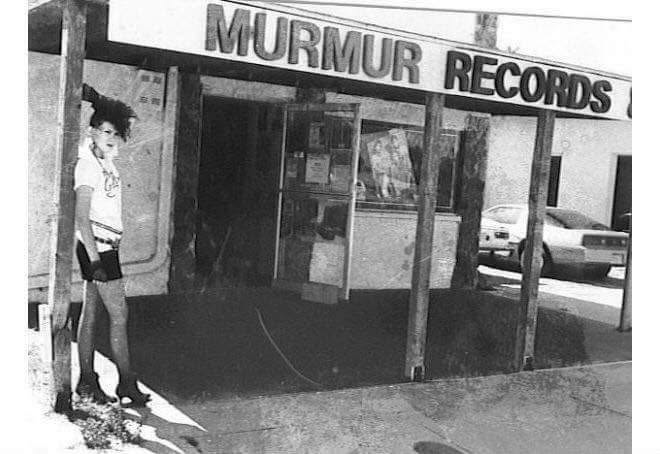
Before an algorithm could shove a playlist of unfamiliar bands into your pocket, Murmur Records and Tapes was pulling off that trick the old-fashioned way: by hand, one customer at a time, in College Park.
Parked near the corner of Edgewater Drive and Smith Street, the little shop spent 13 years turning wide-eyed Orlandoans into card-carrying record nerds. If your first import single came home in a brown paper bag from a clerk who could rattle off the B-side from memory, odds are you have a store named after an R.E.M. album to thank for it.
So here's the story of Murmur Records and Tapes, how one gloriously obsessed music fan turned a storefront into a full-blown scene magnet, and what its long, bittersweet goodbye says about the city's underground.
Table of Contents
How Murmur Records and Tapes Got Its Name
The Murmur Records and Tapes saga kicks off with a single song, heard twice in one night, by a guy who couldn't shake it. In 1981, Florida native Donald Gilliland was hanging out at the 688 Club in Atlanta when R.E.M. played “Radio Free Europe” for the second time that evening. That was it. He was a goner. He made a beeline to Wuxtry Records in Decatur, Georgia, snagged the single, drove it back to Orlando, and played it into the ground.
By 1983, the Athens band dropped its debut LP, Murmur, on I.R.S. Records, a batch of jangly, half-mumbled songs Gilliland would later call flat-out musical magic. That album lit the fuse. In September 1983, the story goes, Gilliland was walking his College Park neighborhood when he spotted a “For Rent” sign in a small storefront window. One month later, he flung open the doors of his own shop and swiped the name without apology. He was all of 24. The tribute was on purpose: a tiny Orlando storefront built to bottle the same college-rock lightning that had knocked him sideways back in Atlanta.
Finding the Store: Edgewater Drive and Smith Street
The shop planted its flag in the heart of College Park, at 2812 Edgewater Drive, right around the Edgewater Drive and Smith Street crossing, the neighborhood's unofficial “Main & Main.” Early print ads cheerfully warned that it was the store “where parking is a problem.” Gilliland packed that first cramped little space with records and posters for about three years before bursting at the seams. Then, in 1986, he scooted a few blocks over to a bigger spot at 709 W. Smith St., one that came with a borderline miraculous Central Florida amenity: actual working air conditioning.
And no, this wasn't some here-today-gone-tomorrow operation. In 1990, the national industry rag Rockpool slipped “Murmur Records, Orlando, FL” onto its hand-picked list of key independent record stores nationwide, which put Murmur Records and Tapes in the same conversation as the country's coolest indie shops. One former regular nailed it, calling it the go-to spot for indie music before indie music existed, a dependable stash of tapes, records, and CDs from early alternative to new wave to industrial to college bands and beyond.
Donald Gilliland: The Man Behind the Counter
Ask anyone who knew the man behind Murmur Records and Tapes and you'll hear the same thing: Gilliland was way ahead of his time. Before he ever rang up a sale, he was already cranking out a monthly music zine called Dogfood, covering whatever happened to be spinning on his turntable, basically Orlando's earliest stab at homegrown music journalism.
The opening stretch was no joke. For the first two years he worked open to close, every single day, zero days off, betting on weird inventory and actually listening when customers asked for something obscure. He built the starter stock largely on consignment from an Atlanta DJ buddy, Mike Cooper. As the place grew, so did the family: Jim Leatherman, Eddie Foeller, Tim Skinner, Beth Ann Sparks, Quan Nguyen, De De Branham, and a few more he credited as the soul of the shop. Sunday softball games pitting staff against customers became the kind of ritual people still grin about.
Gilliland logged roughly two decades in the Florida music-retail trenches before he packed up and moved to Bangkok, Thailand, in March 1996, where he went on to run a chain of music stores and moonlight as a freelance writer and English teacher.
A Record Bin for Music That Didn't Have a Name Yet
What really set the place apart was its taste. From the jump it leaned into what the industry would eventually slap with labels like “alternative” or “college rock,” except those genres didn't officially exist yet. The bins were stuffed with records, tapes, and CDs (once that format muscled in around 1986 and 1987) covering post-punk, new wave, industrial, indie, and the early college-radio canon.
Here's the kicker: alongside Wax Tree Records over on Aloma Avenue, this was one of the only independent stores in the Orlando area that reliably carried punk all through the 1980s and into the '90s. For fans chasing the stuff the mall chains wouldn't dream of stocking, the shop was, plainly, the only game in town for years. That scarcity is exactly why Murmur Records and Tapes felt less like a store and more like a clubhouse with a cash register.
The Shows: Love Tractor, the Ramones, and a Police Raid
Lots of record stores sold music. Hardly any of them threw shows. For Murmur Records and Tapes, that hotline to the Athens, Georgia scene that hatched R.E.M. meant the shop punched way, way above its weight when the amps came out.
Opening Night: Love Tractor (1983)
To christen the store in October 1983, Gilliland booked Love Tractor, an Athens band he knew personally, whose drummer Bill Berry had once banged the kit for R.E.M., to play in the back of the shop. Talk about a fitting debut, hardwiring Orlando's new underground hangout straight into the scene that inspired the whole thing.
The Fifth Anniversary and a B-52's Cameo (1988)
For the store's fifth birthday bash at a downtown Orlando club, Love Tractor came back. Lucky timing, too, because the band happened to be mid-tour with the B-52's that month, and a couple of members, Fred Schneider among them, wandered in and sat in on a few numbers. Gilliland still remembers Schneider hollering through “Born to Be Wild” and “We Are Family,” and still grumbles that not a single recording of the night exists. The one that got away.
CJ Ramone Stops By (1990)
On April 29, 1990, CJ Ramone, all of 24 at the time, swung by for an in-store appearance, signing autographs in a Sex Pistols shirt, naturally. A photo from that day, snapped by die-hard Ramones fan Pete Hembree, popped back up when the Ramones Museum shared it in June 2025, stamping the shop into a little corner of punk-rock history.
The Final Murmur-Era Show (1992)
When Gilliland decided to wind down the original concept in 1992, Love Tractor showed up a third time for the send-off, with Billy “The Human Jukebox” Taylor warming up the crowd. Three visits from the same Athens band, bookending nearly a decade. For a store born from a debut LP, that's a pretty poetic way to roll the credits.
Beyond the Back Room
Gilliland didn't stop at in-store gigs, either. He booked national and regional acts at clubs and halls all over town, including:
- The Swimming Pool Q's, the Athens art-rock outfit
- The Replacements, whose show at a VFW Hall on Edgewater Drive got famously raided by the cops, still the stuff of Orlando punk legend
- True West, of Paisley Underground fame
- The Ocean Blue, The Silos, and singer-songwriter John Wesley Harding (a.k.a. novelist Wesley Stace)
Why Locals Still Talk About Murmur Records and Tapes
It's tough to oversell the grip Murmur Records and Tapes had on Orlando's independent music crowd. Before the internet and the big music outlets made “alternative” a household word, the shop was a one-stop discovery engine for a whole generation, the first place loads of locals ever heard Sonic Youth, the early Descendents, or imported post-punk records.
And the influence went deeper than the cash drawer. A local band called Stumble lifted its name from a song on R.E.M.'s Chronic Town EP; another, 7,000 Gifts, grabbed its name from yet another R.E.M. track, a nod that announced exactly which orbit they ran in. One customer still remembers their first job at age 12, cleaning used records for $2.00 an hour and blowing every cent on English imports. For young fans with no other door into that world, the place doubled as a school you actually wanted to attend.
And the legacy of Murmur Records and Tapes isn't just nostalgia, it's being actively kept alive. The Orlando Punk Archive, a community project documenting Central Florida's underground, keeps name-checking the store as a foundational pillar, and a 2026 YouTube tour of the city's surviving record shops still made room for “the late, great Murmur Records.”
Alobar Books & Music and the Slow Fade (1992 to 1996)
In 1992, after nearly a decade, Gilliland decided to reinvent Murmur Records and Tapes. He felt the rising grunge wave was messing with the room's chemistry, and he was itching for a more grown-up vibe. So he stocked new and used books, ditched the “louder and more abrasive” titles, and rechristened the place Alobar Books & Music.
The pivot, well, it didn't exactly catch fire. The bookish, everything-and-the-kitchen-sink format pulled in fewer customers than the music-first original, and the rise of deep-discount chains like Best Buy was quietly strangling CD margins everywhere. The store hung on, but the old urgency and that magnetic community pull had drained away.
The final chapter came in 1996. As Gilliland got ready to ship off overseas, he sold the shop to longtime employee Quan Nguyen, who immediately dusted off the original name for one last lap. It still couldn't outrun the broader collapse of independent music retail. As one Extinct Orlando commenter put it, the owner wasn't busted so much as just plain tired and ready for something new, right before Napster and iTunes came along and made record stores a whole lot less lucrative anyway.
A Storefront-Sized Education
In the big sweeping saga of Orlando culture, Murmur Records and Tapes sits right alongside vanished haunts like Club Nowhere, the Beechum Theatre, and the Fairbanks Inn, places that shaped the city's alternative life back when the internet hadn't yet made local scene-makers feel optional. Its roughly 13-year run lands it among the longest-running independent record stores College Park has ever seen.
Sure, streaming hands everybody a bottomless library now. But it still can't quite replicate a clerk who slides a record across the counter and says, trust me. For a long, formative stretch of Orlando's musical youth, Murmur Records and Tapes was that clerk, and for the folks who lived it, those bins on Edgewater Drive are still irreplaceable.
🔥 Love Orlando history like this? Well, there's plenty more where this came from, right here.
Sources:
https://www.reddit.com/r/orlando/comments/14hrlhi/used_cdrecord_store_on_edgewater/
https://www.yourcommunitypaper.com/articles/the-way-we-were-remembering-murmur-college-parks-former-music-hub/
https://garlicneversleeps.wordpress.com/2013/10/25/30-years-ago-a-murmur/
https://garlicneversleeps.wordpress.com/tag/688-club/
https://www.worldradiohistory.com/Archive-All-Music/Rockpool/90s/Rock-Pool-1990-08-01.pdf
https://www.facebook.com/groups/grewupinorlando/posts/8468262116558265/
https://garlicneversleeps.wordpress.com/2016/03/17/twenty-years-gone-finding-a-new-life-in-thailand/
https://www.facebook.com/groups/416758979061577/posts/696364721101000/
https://www.facebook.com/groups/grewupinorlando/posts/27064616089829586/
https://www.orlandoweekly.com/music/the-orlando-punk-archive-goes-analog-with-their-first-vinyl-release-34358639/
http://extinctorlando.blogspot.com/p/blog-page.html