Ohev Shalom did not begin with a sanctuary, a rabbi, or a building fund. It began with a newspaper editorial that pointed out who was missing.
The year was 1918. Orlando’s civic clubs were assembling a parade and a rally to sell war bonds, and a local paper observed that Jewish residents, like the city’s Black residents, appeared nowhere in the plans. Nobody had barred the door. The problem was stranger than that. Orlando had no Jewish organization for a committee to send an invitation to. A community leader named Pauline Berman read that and decided the gap needed closing for good.
She was right. More than a century on, the congregation she helped call into being is still running, now from a lakeside campus in Maitland. Here is how Ohev Shalom got there.
Table of Contents
It Started With Kosher Picnics in the Citrus Groves
Before there was a congregation, there were groves.
Central Florida’s first Jewish families made do with what they had. They ate picnic lunches, kosher ones, under the citrus trees on land farmed by Moses and Sarah Levy, and they prayed in each other’s front rooms. Nine such households had settled near Orlando by 1876. The next decade brought the tally to about a dozen, families of Prussian and Romanian descent who kept dry goods counters and small storefronts in a town still deciding what it wanted to be.
A wave of newcomers arrived in what local historians call the Pittsburgh migration, and the numbers climbed again. Then World War I delivered something less welcome: antisemitism sharp enough that praying in a borrowed parlor began to feel exposed rather than cozy. Years before Ohev Shalom existed on paper, these families were already doing everything a congregation does. What they lacked was a name, a charter, and an address.
The Meeting at Harry Kanner’s House
Berman gathered everyone at the house of Harry Kanner, a local businessman, and the loose network finally hardened into an institution.
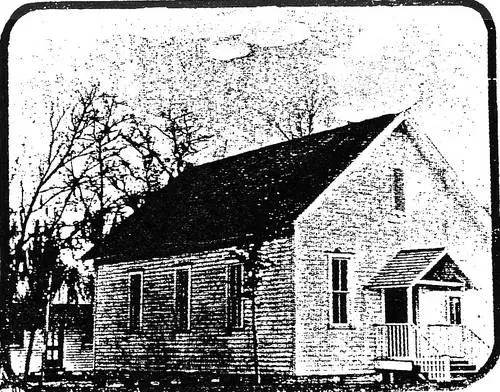
The real estate came first, which is a delightfully practical way to found a religious body. In 1917, with no charter yet signed, the group closed on a small wooden structure at Central Avenue and Terry Street that a Seventh-day Adventist congregation had occupied before them. One room. That room worked as sanctuary, classroom, and social hall, depending on the day.
Three months after the meeting, Florida issued the charter. The year was 1918, and Congregation Ohev Sholem, a spelling that later shifted to Ohev Shalom, became the first synagogue in Orlando.
Four words governed the original constitution: cooperation, religion, friendship and charity. Anyone fitting the phrase “any Hebrew man or woman” could join, with dues set at a dollar a month. The first Torah arrived as a gift from Charles Kanner. Nobody drew a salary, so lay leaders ran the weekly service while Rev. Benjamin Safer rode down from Jacksonville for the High Holidays. A shoestring operation, plainly. Also the only one of its kind in the city.
The Only Synagogue in Town, and It Showed
Growth came fast. Seven or eight years in, the single room had become absurd, and in 1926 the congregation dedicated a synagogue actually built to be one, at Eola Drive and Church Street downtown. George Miller drew the plans. Hold onto the stained-glass windows he specified, because they become the most stubbornly loved objects in this story.
For roughly thirty years this was the only synagogue in town, which meant Ohev Shalom had to serve everybody. Orthodox, Reform and Conservative Jews all prayed in the same room, an arrangement that held until rival congregations formed at the close of the 1940s and the start of the 1950s. Anyone who has tried to get three people to agree on a melody understands the size of that achievement.
Compromise became standing policy. Liturgy, tune, service length, all of it negotiable among people raised in very different Jewish worlds who now shared one building. The early records read less like theology and more like scheduling, which may be exactly why the place lasted.
The milestones pile up quickly.
- 1927: Members chartered a B’nai B’rith chapter for Orlando.
- 1927 to 1928: The congregation bought and opened burial ground on Old Winter Garden Road, christened Mount Neboh and known today as the Ohev Shalom Cemetery.
- 1933: Safer came back to stay, this time drawing a full-time salary. Fifty children sat on the religious school rolls.
- World War II: The congregation ran a USO for Jewish servicemen posted to Orlando, and lent one of its Torah scrolls to the Air Base Chapel, where it stayed until the fighting ended.
- 1948: A separate Sunday School building opened with 90 students, plus another 30 studying in cheder, the Hebrew school.
- 1949: Ohev Shalom signed on with United Synagogue, planting itself in the Conservative movement.
- 1953: At 250 member families, the board authorized three upgrades: a bigger sanctuary, a rebuilt kitchen, and air conditioning. Anyone who has survived an August in Central Florida can guess which one they wanted first.
Goddard Avenue, and the Windows That Came Home
Rabbi Rudolph J. Adler took the pulpit in 1960 and held it for thirty years, a tenure covering the congregation’s entire suburban chapter.
The early 1970s pulled Orlando’s Jewish households out of downtown and into the suburbs, and the congregation went after them, raising a new home on Goddard Avenue beside Lake Fairview. The dedication on March 31, 1974 revealed serious square footage: eight classrooms, a library, a room reserved for the junior congregation, a kosher kitchen, a social hall seating 200 at banquet tables, and a sanctuary bigger than anything they had worshipped in before.
Now, those windows. The 1926 stained glass had gone with the old downtown property, which by then belonged to a developer. Ordering replacements would have been faster, cheaper, and completely defensible. Ohev Shalom tracked the developer down and bought its own windows back instead. Third home in fifty-odd years, and the light was going to come through the same glass it always had.
These were the decades when the congregation grew into a regional anchor for Conservative Judaism. Women took on expanded ritual roles in the 1970s. Members worked the Soviet Jewry cause hard, pressing for emigration and then helping the arriving families build a life here.
When Rabbi Aaron Rubinger was hired in 1990 after Adler retired, the rolls held roughly 600 families, and about 100 members were putting in regular shifts feeding homeless Orlandoans. A mikvah went in during 1996, and Central Florida still has no other Conservative one.
Torahs Carried to Maitland
Goddard Avenue eventually ran short of room too.
Rabbi David Kay arrived as assistant rabbi in 2004. Two years later the board authorized a land purchase along Concourse Parkway South in Maitland. Drawings and approvals consumed 2008. When shovels finally broke ground in 2010, roughly 250 people came to watch.
Then in 2011, members lifted the Ohev Shalom Torah scrolls, walked them out of Goddard Avenue, and carried them into the new Maitland campus to dedicate it. As definitions of continuity go, walking your scrolls to their next address is tough to beat.
The move followed the community rather than the other way around. Maitland, Altamonte Springs and Winter Park had become the metro’s center of gravity for Jewish families, and Ohev Shalom repeated the instinct that took it out of downtown four decades earlier: build where the people already live.
The address today is 613 Concourse Parkway South, just off Maitland Boulevard, on a parcel ringed by Lake Charity, Lake Hope and Lake Faith. Yes, all three. The architecture is imposing and the landscaping stays sharp, which is a fair part of why the campus now books weddings and events on its own merits. It is a long way from one room on Terry Street.
The Clergy Who Held the Ohev Shalom Pulpit
The job has changed hands, but not often, and the roster since 1933 reads like a short story with a very long middle. After Safer moved to full-time work, the congregation went through Rabbi Morris Skop from 1937 to 1949, Rabbi Jerome Kestenbaum from 1949 to 1952, Rabbi Samuel Mallinger from 1952 to 1955, and Rabbi Maurice Idell from 1955 to 1960.
Then it settled down. Adler stayed thirty years. Rabbi Aaron D. Rubinger stayed twenty-seven, from 1990 to 2017, and carries the title Rabbi Emeritus. Rabbi David Kay served from 2004 to 2021, associate at first. Rabbi Murray Ezring filled in as interim from 2021 to 2022.
The cantorial bench has been just as steady. Cantor Allan Robuck sang from 1991 to 2022 and is now Cantor Emeritus. Cantor Jeffrey Weber followed from 2022 to 2025, and Cantor Gershon leads the music today alongside Rabbi Geoffrey Spector.
Where Ohev Shalom Stands Today
The congregation threw itself a Centennial Gala Weekend in February 2018, a hundred years to the year from that first charter.
Ohev Shalom remains a United Synagogue of Conservative Judaism congregation, and no other synagogue in Orlando can claim a longer run. The congregation describes itself now as fully egalitarian, and it draws the circle deliberately wide. Interfaith couples are welcome. So are families of any background, and members of every ability, race and sexual orientation.
For families around Orlando deciding where to enroll a child for religious school, where to sit on the High Holidays, or simply where to find a community that has outlasted a century of the region reinventing itself, the pitch is direct. This congregation has moved three times, built from nothing twice, kept three denominations under one roof at once, and hauled its own stained glass across town rather than part with it.
Trace Ohev Shalom and you trace Jewish Central Florida. Nine families in an 1870s citrus town. A few hundred dollars spent on a single room. A lakeside campus in Maitland with a mikvah, a cemetery, and a century of names in the ledgers.
It also stays, for plenty of local families, simply the place where a grandparent was buried, a bar mitzvah was called, or a wedding was held. Institutional history is one thing. The other kind piles up quietly, one Shabbat at a time.
Not a bad run for a congregation that got started because a newspaper noticed nobody had thought to invite them.
🔥 If you're fascinated by Orlando history like I am, well, there's plenty more where this came from, right here.
Sources:
https://www.isjl.org/florida-orlando-encyclopedia.html
https://www.heritagefl.com/story/2018/02/02/news/a-brief-history-of-congregation-ohev-shalom/926968651.html
https://www.ohevshalom.org/our-history.html
https://www.floridamemory.com/items/show/135980
https://orlandomemory.org/tag/congregation-ohev-shalom/
https://www.ohevshalom.org/about-us/
https://www.ohevshalom.org/contact-us/
https://www.ohevshalom.org/ohev-shalom-clergy.html
https://www.ohevshalom.org/religious-services/
https://www.orangeobserver.com/news/2018/jan/12/congregation-ohev-shalom-of-maitland-celebrates-its-100th-anniversary/